The best chainsaw for high branches depends on the height, branch size, and cutting method you need. The SEESII 2-in-1 is best for extended cordless reach and ground-level cutting; Supstable combines two bar sizes with a telescoping pole; WORX offers a 10-inch bar and up to 12 feet of reach. For branches beyond pole-saw range, CAMPNDOOR and Kutir are manual rope-saw options.
| Product | Best For | Listed Reach |
|---|---|---|
| SEESII 2-in-1, 15.5-foot pole | Long reach and handheld flexibility | Up to 16 feet including user height |
| Supstable 2-in-1 | Two bar sizes and cordless use | Up to 16 feet |
| WORX WG323 | 10-inch bar and Power Share battery family | Up to 12 feet |
| CAMPNDOOR Rope Saw | Manual cutting at high limbs | Up to 25 feet |
| Kutir Rope Saw | Manual cutting at especially high branches | Over 40 feet, as listed |
SEESII 2-in-1 Pole Saw

Best for: Homeowners who want one cordless tool for overhead pruning and smaller ground-level cuts. The saw converts from a pole saw to a handheld mini chainsaw, so the same tool can serve both jobs.
The telescoping pole extends from 4.6 to 9 feet. The product listing describes up to 16 feet of reach when combined with the user’s height. It includes two 4000mAh batteries and a fast charger, with listed runtime of up to 120 minutes and up to 200 cuts.
Why it stands out: Its stated reach is among the longest for an electric pole saw in this selection, and the dual-battery setup may suit longer trimming sessions. Limitation: The listed maximum reach includes user height; actual working reach depends on the user and cutting position.
Supstable 2-in-1 Pole Saw

Best for: Buyers who want both a pole saw and a handheld saw, with a choice of 6-inch and 8-inch guide bars. The listed uses include pruning, branch trimming, firewood cutting, and garden maintenance.
The telescoping pole is advertised for up to 16 feet of reach. The package includes two 4000mAh batteries, with a listed runtime of up to 100 minutes. Auto oiling and tool-free chain tensioning are also listed features.
Why it stands out: Two guide-bar sizes provide a useful choice for different cutting tasks, while the cordless design avoids a power cord during yard work. Limitation: The listing does not specify how long the saw runs for each bar or cutting condition, so runtime may vary by use.
WORX WG323 10-Inch Pole Saw
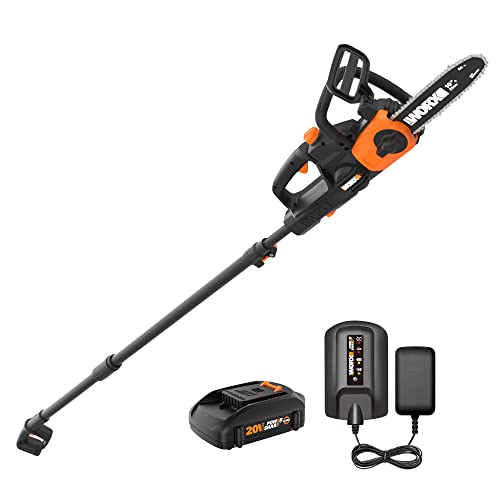
Best for: Buyers who prefer a 10-inch bar and may already use tools in the WORX Power Share battery family. The product includes a battery and charger, and its pole attaches without tools, according to the listing.
The saw weighs 10 pounds and is listed with up to 12 feet of reach. It has an auto-tension feature and runs on a 20V battery. The listing says the battery platform works with more than 75 tools in the Power Share family.
Why it stands out: Its 10-inch bar is larger than the 6-inch bar specified for several mini-saw options, and the pole is designed for quick attachment. Limitation: Bar and chain oil is sold separately, so plan to obtain oil before use.
CAMPNDOOR High Limb Rope Saw

Best for: Buyers seeking a manual option for branches beyond the reach of a pole saw. The listing describes a 53-inch, double-sided saw that cuts by pulling the ropes back and forth.
The kit is listed with ropes, handles, gloves, a sharpening tool, and a carrying case. CAMPNDOOR states that the saw can reach limbs up to 25 feet, though results depend on the branch, setup, and user’s ability to place the saw over it.
Why it stands out: It does not require a battery or pole, and its rope-based design can suit high limbs where a pole saw is too short. Limitation: It requires a successful throw over the branch and physical pulling; it is not an electric chainsaw.
Kutir 55-Inch Rope Saw

Best for: Buyers who need a manual saw for very high branches and want a kit with throw weights and ropes. The listing includes a 55-inch, dual-sided blade, two 25-foot ropes, handles, a sharpening tool, and a storage pouch.
Kutir advertises trimming branches over 40 feet high and cutting limbs up to 16 inches in diameter. These are product-listed capabilities, not guaranteed results; branch condition, rope placement, and cutting technique affect performance.
Why it stands out: Its listed reach exceeds the electric pole-saw options here. Limitation: A rope saw needs space to throw and pull the ropes, making it less suited to crowded yards or branches close to obstacles.
Buying Guide: How To Choose A Saw For High Branches
How much reach do you need?
Measure the branch height and compare it with the product’s stated reach. Check whether the number refers to pole length or estimated reach including the user. A pole saw is generally easier to position for branches within its practical reach; rope saws can extend farther but require accurate placement over the limb.
Should you choose electric or manual?
Choose a cordless pole saw for powered cutting and a controlled overhead setup within its reach. A 2-in-1 model also handles some lower cuts without the pole. Choose a rope saw if you need more reach and are prepared to throw and pull ropes manually. Rope saws require no battery, but the cutting motion takes physical effort.
Which features matter for regular yard work?
Compare bar length, battery count, listed runtime, pole adjustment, and chain maintenance. A longer bar may suit larger cuts, but it does not make every branch safe to cut. Features such as auto oiling, tool-free tensioning, and included batteries can affect setup and upkeep. Always follow the manufacturer’s instructions and avoid cutting branches near power lines.
Frequently Asked Questions
Can a pole saw cut high branches without a ladder?
It can reach branches within its working range from the ground. Confirm the saw’s stated reach and maintain a stable position; do not overextend the pole or stand beneath a falling branch.
Is a rope saw a chainsaw?
A rope saw is a manual chain-style cutting tool operated by pulling ropes. It does not use a motor or battery like an electric chainsaw.
Is a longer bar always better for high branches?
No. Bar length is only one factor. Reach, tool weight, branch size, cutting angle, and the saw’s instructions also matter.
When should I hire a tree professional?
Use a qualified tree professional for large or unstable limbs, branches near power lines, or work that requires climbing or hazardous positioning.