Answering the need for precise, reliable A440 tuning, this guide highlights five top 440 Hz tuning forks ideal for beginners and professionals alike. Each option suits different players: classic guitarists and violinists may prefer simple, compact forks; therapists and music educators might lean toward multi-pack sets for multiple instruments or students. The summary table below helps compare core details at a glance.
| Product | Best For | Notes |
|---|---|---|
| LannuMet Standard A 440Hz | Violin, Mandolin, Guitar players | Single 440 Hz fork; compact and easy to strike |
| D’Addario Planet Waves Tuning Fork | All-instrument tuning by ear | Ergonomic handle; color-coded options |
| 440 Hz Tuning Fork by DRELD | Travel-friendly tuning on the go | Lightweight, durable alloy; easy storage |
| Miwayer Professional A A440 Hz | Healing, medical, and music use | Multi-function, professional-grade |
| Cheerock 3-Pack 440 Hz | Students and beginners | Three forks; clear scale on handle |
LannuMet Standard A Tuning Fork 440Hz

The LannuMet tuning fork provides a single 440 Hz note suitable for tuning a range of stringed instruments. Its compact dimensions (12 x 1.8 x 0.9 cm) make it easy to carry and rest comfortably on instrument bodies during tuning sessions. Best for players who want a straightforward, affordable option for on-the-go tuning, especially violinists and guitarists. Caution: Store away from moisture to preserve metal integrity and avoid corrosion over time.
D’Addario Planet Waves Tuning Fork

This D’Addario Planet Waves tuning fork is precision-designed to offer highly accurate tuning at A 440 Hz. It features an ergonomic molded handle for comfortable use and color-coded O-rings to identify different tuning references quickly. Best for players who tune by ear across multiple instruments, including guitar, bass, and orchestral setups. Limitation: focuses on A440, so you may want an additional reference if you need alternate pitches.
440 Hz Tuning Fork, A440Hz By DRELD
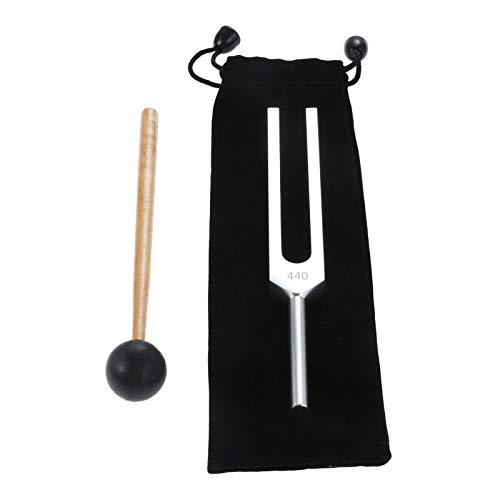
The DRELD 440 Hz tuning fork is designed for broad compatibility, including violin, guitar, and piano applications. Its small size makes it easily stashable in instrument cases or pockets, and it comes with guidance on storage to maintain metal integrity. Best for travel players who need a lightweight, durable reference. Caution: avoid prolonged exposure to damp environments to prevent corrosion and wear on the striker surface.
Miwayer A A440 Hz Tuning Fork Kit

American-made Miwayer tuning forks emphasize precision for healing, medical, and music uses. The kit format supports therapists, educators, and musicians who require reliable, balanced frequencies. Best for professionals needing a robust, multi-purpose tool. Limitations: data does not specify exact material specs for all forks, so consider handling a sample before bulk purchase.
Cheerock 3-Pack 440 Hz Tuning Fork Set

The Cheerock three-pack provides three tuning forks at 440 Hz, each with a clearly visible scale on the handle for quick reference. Ideal for beginners and students who need multiple forks for practice or teaching. Best for classroom or studio use where shared tuning tools are common. Limitation: the set uses metal alloy forks that may require occasional care to prevent tarnish in humid environments.
Buying Guide
What should you check before buying a tuning fork at A440?
- Frequency accuracy: Look for forks specified as A440 Hz to ensure standard concert pitch alignment.
- Material and durability: Metal alloys are common; consider corrosion resistance if you travel or use in humid environments.
- Handle design: An ergonomic handle helps with grip and reduces fatigue during tuning sessions.
- Portability: Pocket-sized forks are convenient for rehearsals and lessons; packs may offer better value for educators.
- Storage guidance: Some forks require drying or protective storage to extend life.
What are the best use cases for these forks?
- Single forks (like LannuMet or DRELD): Quick, on-the-spot tuning for individual instruments.
- Ergonomic or color-coded models (like D’Addario Planet Waves): Ideal for multi-instrument setups and teaching environments.
- Multi-pack sets (Cheerock or Miwayer kits): Great for classrooms, studios, or families with multiple players.
How does one care for a tuning fork to maximize longevity?
- Keep the fork dry; wipe after use if exposed to moisture.
- Avoid storing near direct sunlight or extreme heat, which can affect alloy integrity.
- Store in a protective case or pocket to prevent nicks on the prongs.
Frequently Asked Questions
- What is the standard tuning pitch for most instruments?
- Can I use any tuning fork to tune all instruments?
- Are wooden or plastic mallets included with tuning forks?
- Is a multi-pack more cost-effective than a single fork?
- How should I transport tuning forks safely?
- Do any forks offer additional features beyond tuning?
Most Western instruments use A440 Hz as the standard reference pitch for tuning.
Yes, but some forks are optimized for a single reference pitch (A440). You may benefit from a secondary fork at E or other references if you work with diverse ensembles.
Some sets include a silicone hammer or striker; others are plain forks requiring a separate striker for best tone.
Often yes, especially for teachers or studios needing multiple references or spare forks for students.
Use a small pouch or case; avoid loose storage in instrument cases where forks can rub or be damaged.
Some multi-use forks are marketed for sound therapy or medical uses, but their primary function remains tuning reference in musical contexts.