When precision and a flawless finish matter, very fine sandpaper is the right tool for paint, wood, metal, and plastic projects. This guide highlights five top options, explaining who each is best for and why. Whether you’re detailing automotive panels or smoothing delicate woodwork, you’ll find a precise-match listed below.
Buyer at a glance: the top picks are selected for finish quality, durability, and versatility. Use the summary table to compare grit range, best uses, and any notable limitations at a glance.
| Product | Best For | Grit Range | Notes |
|---|---|---|---|
| 3M Sandpaper, 220 Grit | General finishing | 220 | Balanced for paint, wood, metal. |
| HL-YMXQ 22 PCS Assortment | Broad projects, varying finishes | 120–20000 | Includes finger cots for protection. |
| Shineboc 1000/2000/3000/5000/10000 | Mirror-like polishing | 1000–10000 | Premium silicon carbide, wet/dry. |
| Model Sanding Sponge Set | Intricate model work | 240–2000 | Conforms to contours; reusable. |
| AUSTOR 2000–10000 | Automotive and fine furniture finishing | 2000–10000 | Wet/dry, 9 x 3.6 in sheets. |
Below you’ll find detailed product sections to help you choose the right very fine sandpaper for your needs, followed by a practical buying guide and a concise FAQ.
3M Sandpaper 220 Grit — General Finishing

Best for: General purpose finishing on paint, wood, and metal. This 220-grit option from 3M provides a balanced cut with good surface refinement. Suitable when you need a reliable step between coarse and ultra-fine rounds. Limitation: not the finest grade for mirror finishes; pair with higher grits later in the process.
HL-YMXQ 22 PCS Assortment — Ultimate Flexibility
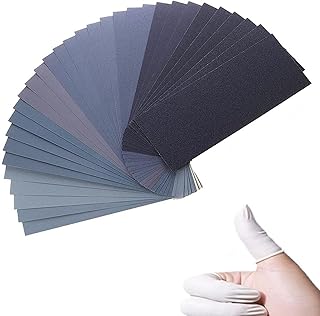
Best for: Users who need a wide grit spectrum for many projects, from roughing to final polish. This set covers 120 to 20000 grit, plus finger cots for finger protection. Better for hobbyists and pros who value a single purchase for multiple stages. Caution: the assortment requires careful grit selection to avoid over-sanding delicate surfaces.
Shineboc 1000/2000/3000/5000/10000 — Fine Polishing Set

Best for: Craftsmen aiming for mirror-like finishes on metals, plastics, and wood. The set’s five grits (1000–10000) are ideal for progressive refining and polishing. Better for controlled, high-gloss results. Limitation: higher grits may require more surface preparation before polishing to avoid scratches.
Sanding Sponge Model Kit — Precision Finishes

Best for: Delicate model work and intricate surfaces. The sponge backing and 240–2000 grit range blend flexible control with refined finishing. Better for curved surfaces and tight corners. Caution: may wear faster on very hard plastics if used aggressively.
AUSTOR 2000–10000 Assortment — Automotive Finishing

Best for: Automotive sanding and fine furniture finishing. This 30-piece set offers 2000, 3000, 5000, 7000, and 10000 grits in 9 x 3.6 inch sheets. Choose this if you need a compact set with true micro-finish options. Limitation: lacks lower grits; not suited for heavy material removal.
Buying Guide: Key Considerations
What grit range do you need? For final finishes, prioritize higher grits (1000–10000). For initial smoothing, start with 200–400. Dry vs wet use: wet sanding reduces dust and can yield finer results, but requires proper cleanup. Material compatibility matters: metal, wood, and plastics react differently to grit and backing. Paper backing type influences durability; sponge-backed options offer contouring but may wear differently from rigid sheets. Always test on a hidden area first.
How to choose by project type: automotive finishing benefits from a wide grit spectrum and consistent abrasion. Woodworking typically uses progressive grits with attention to dust control. Model making requires flexible, small-area abrasives to reach corners without gouging. Finance the right set to cover most stages of your project in one purchase.
Usage Tips for Best Results
- Always sand with the grain on wood to avoid cross-grain scratches.
- Use a sanding block or sponge to maintain flatness and avoid uneven patches.
- Wipe the surface between grit changes to monitor progress and prevent embedded grit from marring the finish.
- Keep the sandpaper flat and clean; clogged sheets require replacement for consistent performance.
Frequently Asked Questions
- What is the fine-grit range for finishing work? Typically 1000 to 10000 grit.
- Is wet sanding always better than dry? Wet sanding reduces dust and can produce finer finishes, but dry sanding is faster for bulk material removal.
- Can I use very fine paper on metal without clogging? Yes, but use appropriate lubrication or water to reduce heat and prevent clogging.
- Should I use different grits on curved surfaces? Yes, start with a lighter grit and switch gradually to higher grits while following the contour.
- Are sponge-backed sheets less durable? They’re more flexible for contours but may wear differently; choose based on surface geometry.